


Nqobile Phoswa (Agricultural Liaison Officer) and Natalie Furniss (Crop Scientist)
It is encouraging to see small-scale growers increasingly embracing technology and scientific innovation. While yield remains important, growers are becoming more aware of the value of cane quality. This is particularly relevant because payment is based on recoverable value (RV) sugar, meaning that both cane tonnage and quality contribute to profitability.
One technology creating new opportunities for growers is the use of drones for agrochemical application. This has made the use of sugarcane ripeners more accessible, allowing growers to improve cane quality and maximise returns. To support the adoption of this technology, SASRI has been actively sharing information and practical guidance through grower information days and training events.
These engagements have highlighted an important lesson: ripeners are most effective when they are used correctly. As with any technology, poor decisions or incorrect application can reduce the expected benefits.
One of the most common mistakes is applying ripeners without first determining whether the crop is suitable for treatment. Not all sugarcane requires ripening. Some varieties mature naturally under natural ripening conditions, while stressed cane may not respond well to ripeners. Stress can result from factors such as weed competition, water shortages, pests, diseases or other environmental conditions.
Before deciding to ripen a field, growers are encouraged to inspect their crops carefully and seek advice from an extension officer or advisor. Making an informed decision can prevent unnecessary costs and improve the chances of achieving a positive response.
To assist with these decisions, SASRI has developed PurEst™, a tool that provides a rapid indication of cane maturity. PurEst™ estimates stalk juice purity and helps growers determine whether ripening is likely to be beneficial. The tool can also assist with decisions regarding irrigation and harvest scheduling.
To use PurEst™, growers need a refractometer, which measures the sugar concentration of cane juice. The readings are entered into the PurEst™ application, which then provides guidance on crop maturity and ripener suitability.
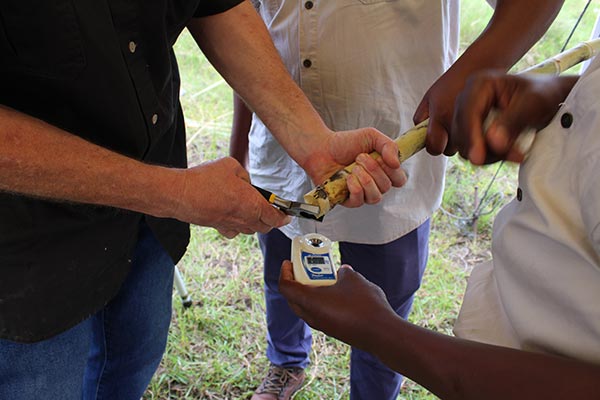
By using tools such as PurEst™ and following technical recommendations, growers can take the guesswork out of ripening decisions. Successful ripener use starts with understanding the crop, assessing field conditions and applying products only when they are likely to deliver a benefit.
For more information about PurEst™ or assistance with assessing your cane, contact your nearest SASRI Extension Specialist.