


Brighton Mabasa (Agrometeorologist) and Phillemon Sithole (Extension Specialist- North Coast)
Review
During autumn and early winter (March to June) 2026, rainfall was generally below the long-term mean (LTM) across much of KwaZulu-Natal, particularly in the coastal regions (Figure 1). In contrast, Mpumalanga and parts of Zululand received above-average rainfall during early autumn, resulting in well-replenished irrigation water resources. Consequently, no significant irrigation water restrictions are anticipated.
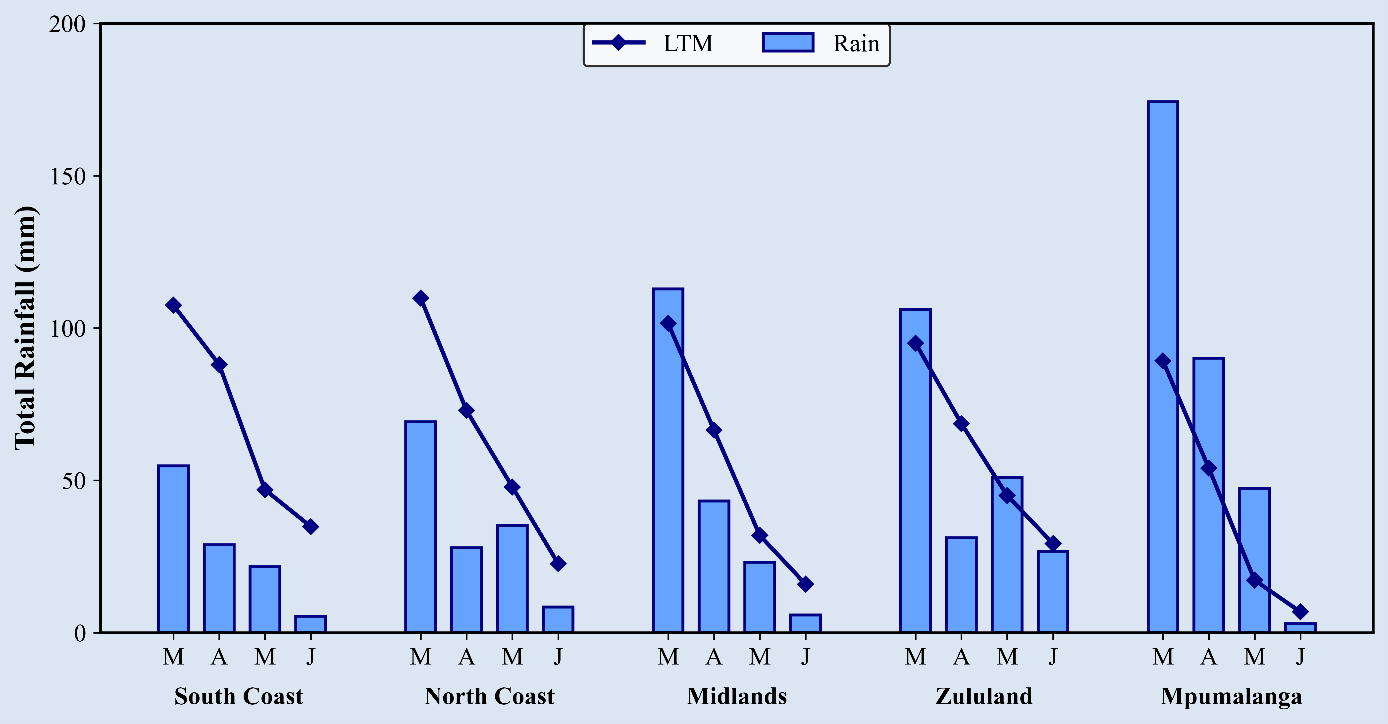
Figure 1: Regional average monthly rainfall for March to June 2026 compared with the corresponding long-term mean (LTM) across the five South African sugarcane-growing regions.
Outlook
In June 2026, the Niño 3.4 index reached +1.44 °C (Figure 2), confirming established El Niño conditions. Climate model consensus indicates continued warming, with an expected peak between September and October 2026. Forecasts indicate that El Niño conditions are likely to persist throughout the 2026/27 summer season before gradually weakening thereafter.
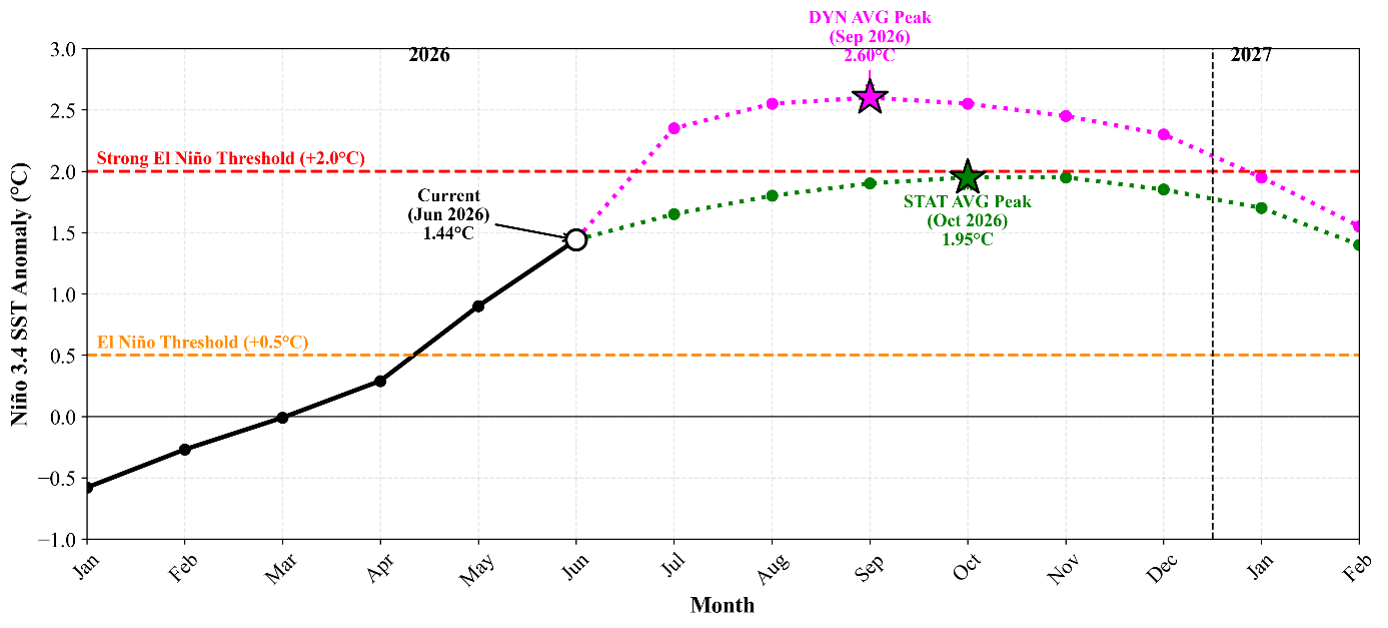
Figure 2:H istorical monthly Niño 3.4 SST anomaly record and ENSO plume forecast showing monthly Niño 3.4 SST anomaly predictions from multiple forecast models. Sources: NOAA Physical Sciences Laboratory (https://psl.noaa.gov/data/timeseries/month/Nino34)
The latest South African Weather Services (SAWS) and the International Research Institute (IRI) for Climate and Society seasonal forecasts suggest that above-normal rainfall is the most likely category for the rest of this winter (JJA) and early spring (SON) 2026 with below-normal rainfall predicted for later in spring across most sugarcane producing regions of South Africa. Both forecast systems also indicate an enhanced probability of above-normal minimum and maximum temperatures, consistent with the warming associated with the developing El Niño.
During El Niño events, South Africa’s sugarcane-growing regions are likely to experience below-normal summer rainfall. The 2026/2027 summer rainfall outlook will be available in August.
Please visit the SASRI WeatherWeb https://sasri.sasa.org.za/weatherweb for the latest industry weather reports and links to up-to-date seasonal climate forecasts.