


Dr Iona Basdew (Biosecurity Scientist)
Dragonflies and damselflies (Order: Odonata) are increasingly being recognised as good indicators of ecosystem health and freshwater quality, because these insects depend on clean aquatic habitats and diverse terrestrial landscapes. In South Africa’s cane production regions, irrigation canals, rivers, wetlands, and farm dams form critical interfaces where these predatory insect communities reflect the cumulative impacts of land use practices. Diversity and abundance of dragonfly and damselfly species are typically associated with good water quality, intact riparian vegetation, and reduced chemical disturbance. Conversely, smaller populations and reduced species diversity are generally a function of nutrient enrichment of water bodies, sedimentation, or pesticide stress.
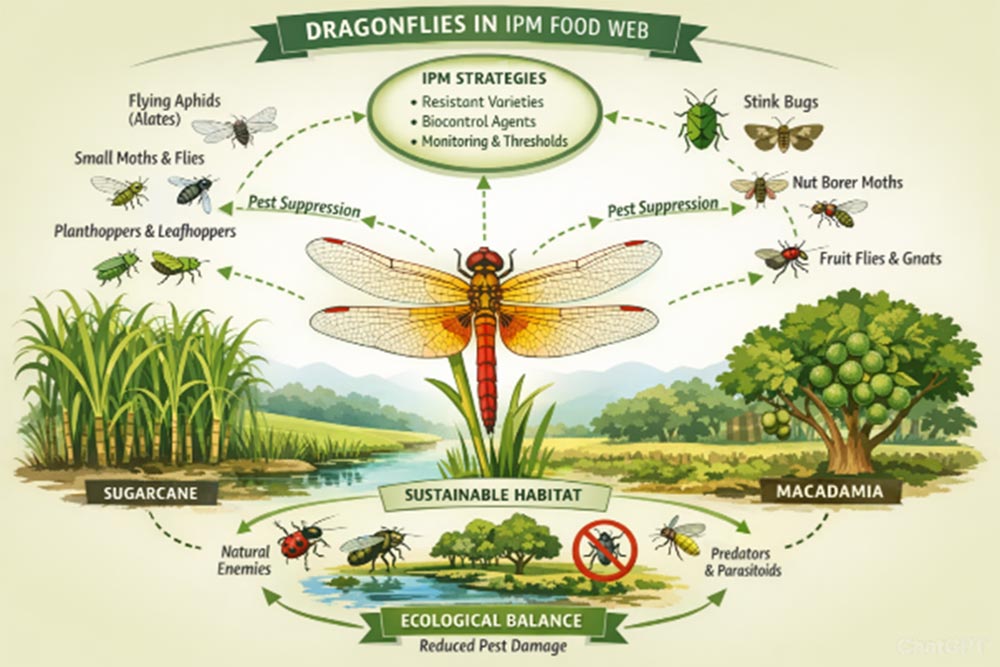
Figure 1: Dragonflies in IPM food web.
Dragonfly and damselfly gatherings differ markedly between South Africa’s coastal and inland sugarcane regions, reflecting variation in climate, hydrology, altitude, and vegetation structure. Assessing dragonfly populations to determine the ecological health of an ecosystem involves monitoring their species diversity and abundance across their aquatic larval and aerial adult stages. Sensitive to habitat change, pollution, and oxygen levels, these insects are reliable indicators of environmental integrity.
In relatively undisturbed or well-managed sugarcane catchments, characteristic dragonfly species may include the broad scarlet (Crocothemis erythraea), blue-basker (Urothemis edwardii), red-veined dropwing (Trithemis arteriosa), tropical bluetail (Ischnura senegalensis), and the common citril (Ceriagrion glabrum) (Figure 2). These species are reliant on clear water, minimal sedimentation, and intact marginal vegetation for successful larval development and adult foraging.
Within the South African sugarcane industry, these regional insect communities provide an additional biodiversity lens for evaluating the implementation of integrated pest management (IPM). Sustainable IPM approaches promoted by SASRI, including reduced reliance on broad-spectrum insecticides, protection and rehabilitation of riparian corridors, and landscape heterogeneity, directly benefit dragonfly populations. Monitoring dragonflies across coastal and inland sugarbelts can therefore offer a regionally sensitive, low-cost indicator of freshwater health, biodiversity conservation, and IPM effectiveness in sugarcane agroecosystems in South Africa.
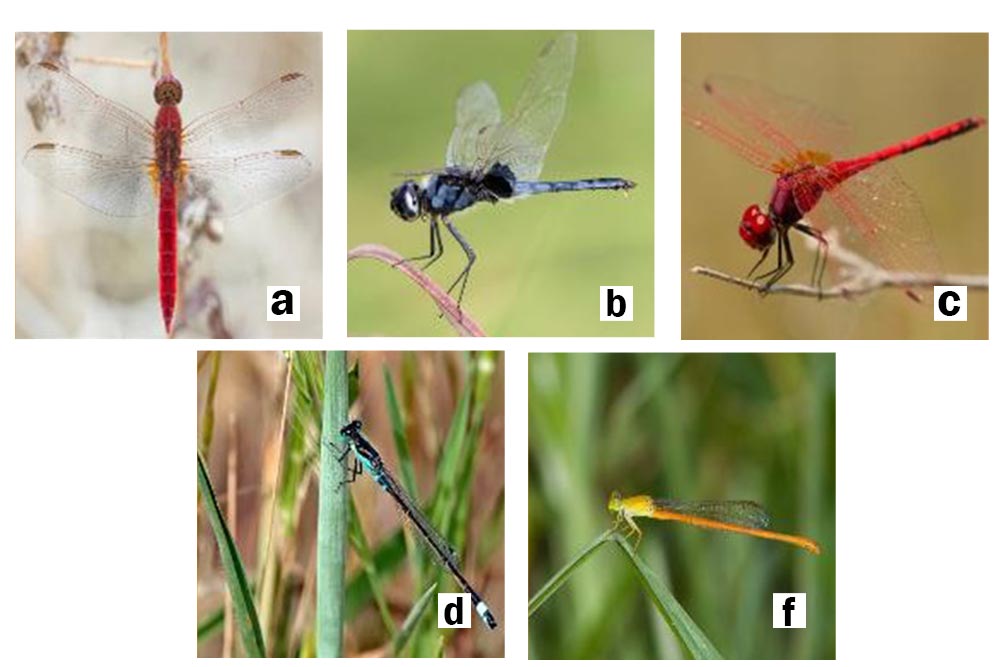
Figure 2. Common species found within the sugarcane landscape: a. Broad scarlet (Crocothemis erythraea), b. Blue basker (Urothemis edwardii), c. Red-veined dropwing (Trithemis arteriosa), d. tropical bluetail (Ischnura senegalensis), e. Common citril (Ceriagrion glabrum)
Dragonflies are effective aerial predators of a wide range of flying insects and contribute indirectly to the ecological regulation of pest populations within and adjacent to sugarcane (or other crop) fields. Dragonflies act by intercepting flying pest stages, especially winged aphids, moths, flies, and hoppers, thereby helping slow pest spread in surrounding agrosystems. IPM strategies that integrate resistant varieties, appropriate harvest timing, biological control, and habitat management support both pest suppression and freshwater integrity. Monitoring indigenous dragonfly and damselfly communities alongside pest dynamics, therefore, provides a practical, low-cost indicator of environmental health and IPM effectiveness in sugarcane agroecosystems in South Africa.