

Slindile Sithole (Assistant Research Officer)
Nematodes are microscopic, worm-like organisms infecting plants, humans and insects. Nematodes occurring in soil, associated with cane roots, are divided into three groups: Free-living (good) nematodes, Entomopathogenic (good) nematodes and Plant parasitic (bad) nematodes.
Plant parasitic nematodes damage the roots, creating root knots (galls), lesions or wounds. All of these can result in serious yield loss, particularly in sandy soils with less than 15% clay. Common signs of infestation include uneven growth across the field, poor germination, stunted cane, yellowing leaves, spiky leaves, and unhealthy roots. Infested crops may also take longer to form a canopy, allowing weeds to compete more easily. In addition, stressed cane is often susceptible to infestation by other pests and diseases, thereby increasing the frequency and cost of agrochemical applications.
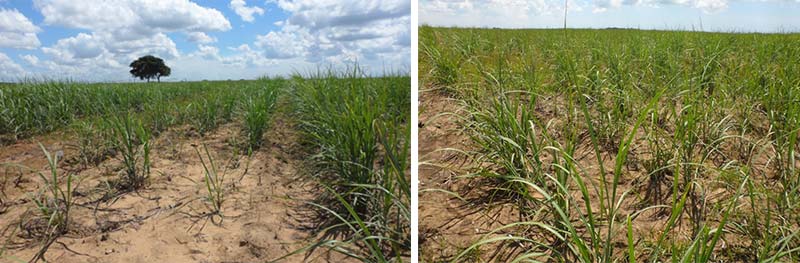
Figures 1: Poor sugarcane growth (large open rows and patchy distribution of cane) in plant parasitic infested fields.
To confirm nematode presence, soil and root samples should be sent to a reputable laboratory. To take the soil and roots samples, ten sub-samples need to be taken in one hectare, pooled together in a plastic bag and submitted to the lab as soon as possible or within 2 days of sampling. This provides information on the nematode community, including the proportion of plant-parasitic nematodes present and guides appropriate control measures.

Figure 2: Galls on sugarcane roots caused by root knot nematodes (Meloidogyne sp.).
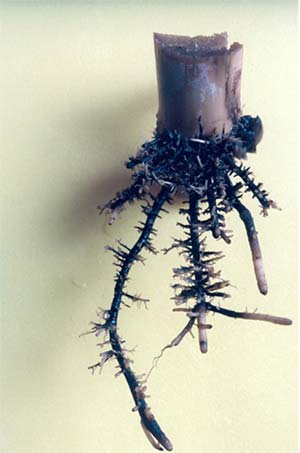
Figure 3: Sugarcane roots damage caused by stubby root nematodes (Trichodorus sp. and Paratrichodorus sp.).
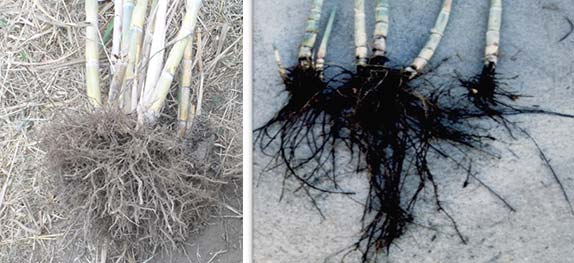
Figures 4: Sparse root hairs.
Control of harmful Nematodes
While nematodes can cause serious damage to sugarcane, particularly in sandy soils, they can be managed. Management methods include responsible chemical use, biological options, selecting tolerant varieties, planting and harvesting in late summer- early autumn if possible, and the use of organic amendments and green manures.
Chemical control: Chemical control remains effective, but it must be used responsibly and in line with regulations. Products containing active ingredients like oxamyl and imidacloprid may be used, with guidance from an agricultural advisor. Although registered agrochemicals for nematode control in sugarcane remain available, most are classified as highly hazardous under regulatory frameworks, with many designated as restricted agricultural remedies due to their adverse effects on human and environmental health. While these products are still on the market, growers who choose to use non-biological remedies must adhere strictly to label recommendations and employ appropriate personal protective equipment (PPE) to safeguard fieldworkers and minimise risks.
Biopesticides: Research has increasingly shifted toward alternatives/complements of synthetic chemical control, as restricted products are harmful to the environment and human health and are expected to be phased out. Exploring biological control options, therefore, represents a promising pathway for sustainable nematode management and strengthens an integrated pest management (IPM) approach.
Growers wishing to test the efficacy of specific biological products should follow SASRI’s guidelines for on-farm observation trials, available from your local Extension Specialist. See article “Simple on-farm observation trials”, in this edition of the Link.
Time of planting/harvesting: On poor sandy soils under irrigation in Mpumalanga, crop loss from nematodes can be partially avoided by planting and harvesting early in the season (April, May) rather than in spring (October, November) when nematode activity is lower due to cooler temperatures. The same principle is likely to also apply to rainfed cane.
Organic amendments and green manures: Crop rotation and maintaining good soil health can help reduce populations, especially when using crops like Sunn hemp, or oats. See SASRI manual: Green Manuring.
For more information, please consult the following Information Sheets:
8.2. Nematodes, as well as 8.12. Nematode management.