

In 2025, widespread and profuse flowering was experienced in many parts of the South African sugarcane belt, including in varieties that typically show sparse flowering. Flowering reports for the 2026 season are now available on the SASRI WeatherWeb for all industry automatic weather stations. This information assists growers in minimising the negative impacts of flowering by allowing them to adjust their harvesting schedules in advance if heavy flowering is predicted. Flowering in sugarcane is triggered by warm night temperatures (above 18 °C), adequate soil moisture, and shortening daylength during late March.
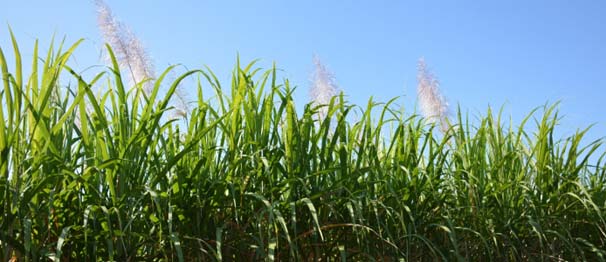
Flowering in 2026 is expected to be lower than in 2025, although irrigated regions may still experience moderate to profuse flowering.
Outlook for 2026
| Mill Supply Area | *Representative weather station | 2025 | 2026 |
| Amatikulu | Gingindlovu- SASRI (477) | ||
| Eston | Eston- Hayfields (458) | ||
| Felixton | Empangeni- SASRI (478) | ||
| Gledhow | Kearsney- SASRI (476) | ||
| Komati | ***Komati- Squamans (456) | ||
| Maidstone | Mt Edgecombe- SASRI (461) | ||
| Malelane | Malelane- Mhlati (465) | ||
| Noodsberg | Noodsberg- Illovo Sugar Mill (23) | ||
| Pongola | Pongola- SASRI (6) | ||
| Sezela | Sezela- LV Sugar Estate (519) | ||
| UCL | Noodsberg- Illovo Sugar Mill (23) | ||
| Umfolozi | Mtubatuba- Dangu (463) | ||
| Umzimkhulu | Umzimkhulu- Seafield (518) |
**Legend:
| No flowering expected | 0-0.2 | |
| Only profuse flowering varieties expected to flower | 0.2-0.6 | |
| Profuse and moderate flowering varieties expected to flower | 0.6-0.8 | |
| Profuse, moderate and sparse flowering varieties expected to flower | >0.8 |
*Weather stations are intended to be broadly representative of mill supply areas. Where growers are located in closer proximity to alternative stations, the more appropriate station can be selected via the SASRI WeatherWeb.
**Likelihood of flowering is based on the SASRI WeatherWeb flowering index, determined by the number of days with favourable conditions (nighttime temperatures exceeding 18°C and adequate soil moisture) during the flowering initiation period in March. In rainfed areas, flowering index values assume high potential soils (soil TAM = 100 mm).
***Substantial variation in flowering index values observed across several weather stations within the Komati region.
Key observations for 2026
- In rainfed regions, cumulative rainfall for the month of March was generally lower in 2026 as compared to 2025, likely affecting soil water availability during the flowering induction period. As a result, most weather stations, particularly in the rainfed regions, show substantially lower flowering index values in 2026 as compared to 2025. This shift suggests a more favourable environment for sucrose accumulation, as flowering depletes sucrose reserves in the stalks.
- Flowering index values remain relatively high in the rainfed Amatikulu mill supply area.
- Relatively high flowering potential is indicated in parts of the irrigated northern areas of KwaZulu-Natal (Umfolozi and Pongola) and Mpumalanga (Malelane and Komati).
- It should be noted that different weather stations situated in parts of Komati showed substantial variation in flowering index values. For example, the Komati AWS at the SASRI research station showed a low value (0.19) indicating little to no flowering, while weather stations at Tenbosch (0.76) and Squamans (0.84) indicate a high likelihood of moderate to profuse flowering. These differences are mainly due to local topography (altitude) which affects nighttime temperatures. Lower-lying areas, such as the SASRI Komati research station, tend to accumulate cold air flowing downhill, resulting in lower minimum temperatures.
Why flowering occurs
Sugarcane requires sufficient soil water and warm nighttime (minimum) temperatures above 18 °C in order to initiate the flowering process during the induction period. Generally, flowering induction begins in the last three weeks of March, when daylength drops below 12.5 hours.
Managing flowered cane
- Flowering in commercial sugarcane fields can reduce both yield and quality, especially if harvesting is delayed. A previous study in the KwaZulu-Natal north coast region showed yield losses of up to 30 t/ha, with an up to three percentage point drop in sucrose content, in flowered cane (Humm, 2001). To minimize these losses, it is advised that flowered sugarcane be harvested before September / October if the number of flowered stalks per field exceeds 20%. Delayed harvesting can lead to quality deterioration due to side-shooting, increased risk of sour rot, and ageing of mature green leaves that produce sucrose.
- Cane can be carried over provided that the flowering rate is below 20% and eldana infestation remains at an acceptable level. Growers should arrange for an eldana survey and seek guidance on whether the recorded levels are suitable for carryover.
- Flowered fields with eldana infestations should be given priority during harvesting over non-flowered fields.
- Stalks that have flowered do not respond to chemical ripeners, so growers should avoid applying ripeners to profusely flowering crops (with more than 20% of the stalks per field), as this could increase crop stress and have a detrimental effect on cane yield and quality.
- Topping height of flowering cane is important, especially where pithing is severe. In such cases, a lower topping height is advisable.