



Phillemon Sithole (Extension Specialist- North Coast)
Review
Most parts of the industry received near normal rainfall at the onset of the 2025/26 summer rainfall season. However, rainfall was generally below average for January and February 2026 in the rainfed regions of KwaZulu-Natal (Figure 1). Extreme daytime temperatures were also experienced over that period especially in the coastal areas, causing considerable water stress in sugarcane fields. In Mpumalanga, heavy rainfall, exceeding 400 mm in some parts, was recorded in mid-January resulting in widespread flooding, with loss of life reported. This was followed by extremely dry conditions in February which helped dry out flooded fields. Unfortunately, irrigation operations were less than optimal in some parts due to the lasting impacts of the flooding.
All the major irrigation water sources are well replenished across the industry therefore no drastic restrictions are anticipated for the foreseeable future.
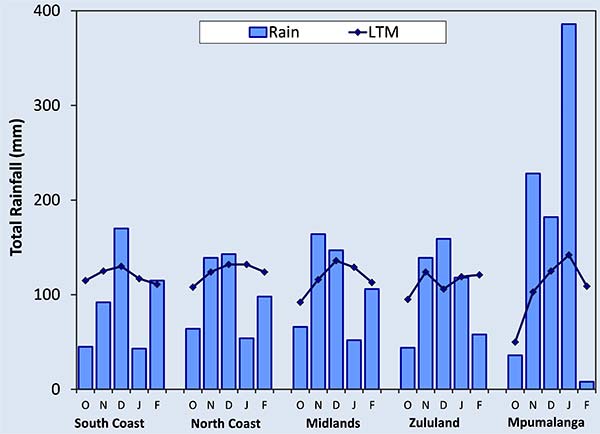
Figure 1: Regional average monthly total rainfall for October 2025 to February 2026, compared to the corresponding long-term means (LTM).
Outlook
The El Niño–Southern Oscillation (ENSO) system remains in a weak La Niña phase, but a return to ENSO-neutral conditions is expected during this autumn, with a possible quick shift to El Niño by late winter. However, no strong relationship exists between ENSO and winter rainfall patterns across the sugar industry.
The South African Weather Services and the International Research Institute for Climate and Society predict above normal rainfall for autumn and winter 2026 for the eastern coastal regions of the country, while the European Centre for Medium-Range Weather Forecasts predicts near normal rainfall. Mild winter minimum temperatures are anticipated.
Please visit the SASRI WeatherWeb https://sasri.sasa.org.za/weatherweb for the latest industry weather reports and links to up-to-date seasonal climate forecasts.